
Mobile Home Leveling Cost & FAQ
In North Western and Central Washington, mobile home leveling with On Level Services costs $1,499 for a single-wide, $1,999 for a double-wide, and $2,499 for a triple-wide, plus any add-on charges your home needs. This FAQ answers the questions homeowners ask us most about mobile home leveling cost, how often to re-level, tie-downs and foundations, skirting access, and FHA/VA financing. We have more than 30 years of manufactured home experience and are licensed, bonded, and insured.
Cost and Pricing
How much does it cost to level a mobile home?
Our re-leveling prices are published, so you know the starting point before you call:
Single Wide
Double-wide
Triple-wide
These prices cover re-leveling on the home’s existing piers. Homes that need pier replacement, tie-downs, or foundation repair will cost more. See the full breakdown on our North Western WA pricing page.
What add-on charges can apply?
-
Per-Inch Charges
Per-inch charges apply only when a home is more than 1 inch out of level.
-
Single-Wide Tip-Outs $300
Single-wide tip-outs are $300 each.
-
Replacement Materials $0–$30
Replacement materials, if needed, aren't included and typically run $0 to $30.
-
Earthquake System Adjustment $100–$200
Homes with an existing earthquake system cost $100 to $200 more to adjust to the new height, depending on the system.
-
Travel Charges $100/hr
Homes more than 1 hour from our location have a travel charge, typically $100 for each additional hour.
-
Cancellation / No Re-Level $499 + travel
A $499 service fee plus travel applies if you choose not to re-level on your scheduled day or cancel with less than 48 hours' notice.
What factors affect mobile home leveling cost?
Every home is different, and these factors have the biggest effect on your total:
- The size of the home (single, double, or triple section)
- How far the home has shifted out of level
- The number and condition of the existing piers, pads, and shims
- Attached additions, decks, or carports that affect how the home can be leveled
- Add-on work such as new tie-downs, pier replacement, or foundation repair
- Travel distance from our location
Do you charge by the hour or by the job?
By the job. Your price is based on our published rates for your home’s size plus any add-ons, so you know your total mobile home leveling cost before work begins.
Is it cheaper to level my mobile home myself?
DIY leveling can save on labor, but it carries real risk. The work takes heavy-duty jacks, a water level, and crawling under a home that weighs several tons. Lifting too quickly or unevenly can crack drywall, damage plumbing, or bend the frame, and those repairs can cost far more than a professional re-level.
What happens if I wait to re-level my home?
Putting off a re-level usually raises the final bill. An out-of-level home puts stress on walls, doors, windows, plumbing, and the marriage line on multi-section homes. Small problems such as sticking doors or drywall cracks can grow into bigger repairs. Correcting the level early is the best way to keep your mobile home leveling cost low.
Do you offer free quotes?
Yes. Call 360-333-2829 to tell us about your home. We’ll explain your price and any add-ons before anything is scheduled.
Do you offer a warranty on re-leveling?
No. We guarantee your home is level when we leave, but no one controls the soil under a manufactured home. Moisture, frost heave, burrowing animals, and tree roots can all start the settling process again, which is why re-leveling is periodic maintenance.
Frequency and Timing
What are the signs my mobile home needs leveling?
If you notice any of these warning signs, your home is probably out of level:
- Cracks in drywall or ceilings
- Separation at the marriage line
- Doors that rub, stick, or swing open or closed on their own
- Windows or sliding doors that are hard to open
- A feeling of walking uphill or downhill
- Items rolling off countertops or tables
- Gaps around trim, cabinets, or window frames
Here’s a deeper look at the signs your mobile home needs leveling.
How often should a mobile home be re-leveled?
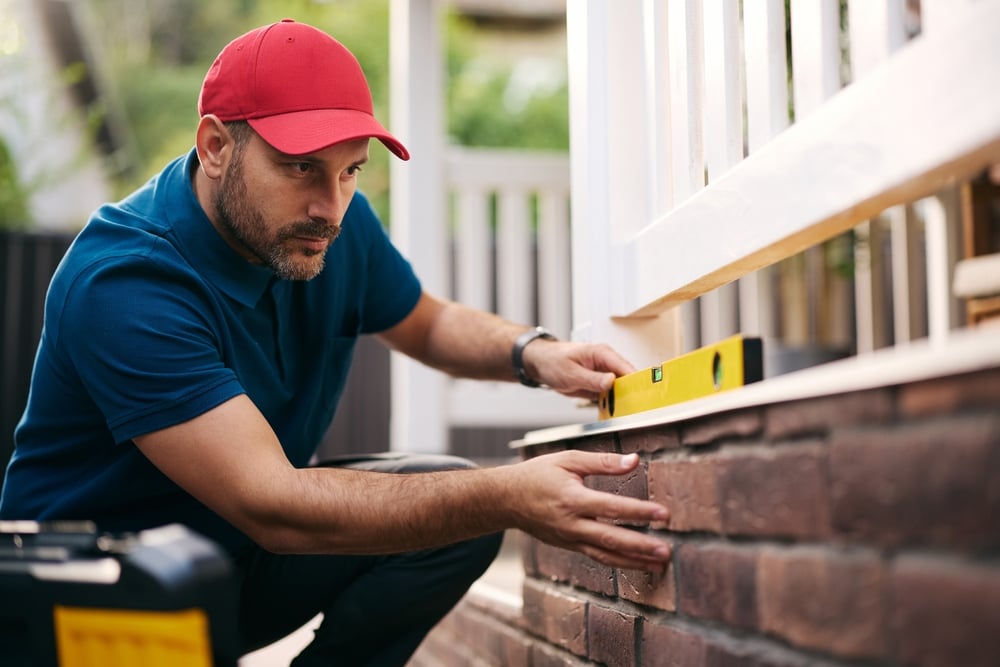
Most manufacturers recommend checking a manufactured home’s level every 3 to 5 years and re-leveling when pier heights differ by more than ¼ inch. Homes on wet or poorly drained ground, or in areas with freeze-thaw cycles, may need attention sooner. Read more about how often to re-level a mobile home.
Should a new home be checked after it's set?
Yes. New homes often settle into the soil during the first several months after installation. Having the level checked within the first year catches that settling before it causes damage.
Will re-leveling fix my uneven floors?
Not always. Re-leveling corrects the steel I-beams and the piers beneath them, which fixes a home that tilts. A soft spot, hump, or dip in one area of the floor comes from worn joists or subfloor damage, and that’s a separate repair. We’ll point it out if we see it.
How long does it take to level a mobile home?
Most single-wide and double-wide re-levels are finished in one day. Homes that need pier replacement, new tie-downs, or foundation work can take longer. We’ll give you a time estimate along with your quote.
Is there a best time of year to re-level?
If you’re already seeing warning signs, don’t wait for a particular season. Many homes shift the most after a long wet season or a hard freeze, so a level check after winter is a good habit.
Do I need to move out during leveling?
No. Before the crew arrives, secure loose items on shelves and walls and make sure there’s clear access to the skirting and crawl space.
Can leveling cause new cracks?
Sometimes. Homes that have been out of level for a long time can show new drywall cracks, rubbing doors, or loose trim after they’re brought back to level. We make sure exterior doors latch, but those follow-up repairs aren’t included in the re-level price.
Tie-Downs and Foundations
How much does it cost to level a mobile home?
Our re-leveling prices are published, so you know the starting point before you call:
Are tie-downs required for mobile homes?
Federal installation standards require manufactured homes to be anchored, and lenders often require a proper tie-down system for FHA, VA, and refinance loans. We install the Xi2 HUD-compliant tie-down system, which carries engineering approvals in virtually all states and jurisdictions. Learn more about mobile home tie-down installation.
Why do tie-downs matter?
A properly installed tie-down system helps:
- Hold your home in place in high winds and storms
- Protect against movement during an earthquake
- Meet lender requirements for FHA, VA, and refinance loans
Do tie-downs alone qualify my home for an FHA or VA loan?
Not necessarily. HUD’s Permanent Foundations Guide doesn’t consider screw-in soil anchors a permanent anchorage, and it requires reinforced concrete footings below the frost line. Lenders asking for foundation certification usually need a qualifying FHA/VA foundation system.
What type of foundation does my mobile home have?
Most manufactured homes sit on piers made of concrete block or steel stands, set on pads or footings. Some homes have permanent foundations engineered to meet HUD guidelines for FHA and VA loans. We can identify your foundation type when we look at the home.
Do you repair damaged piers and foundations?
Yes. Common repairs include replacing cracked or sunken piers, correcting settled pads, and resetting shims. See our manufactured home foundation repair services for details.
Can tie-downs be added during a re-level?
Yes, and it’s the best time to do it. Tie-downs should go on a level home, because anchoring an out-of-level home locks the problem in.
Xi2 tie-down system
Limited Time-
For a limited time, get $500 off an Xi2 tie-down system when it's installed at the time of your re-level.
Skirting and Access
Should I check under my home between re-levels?
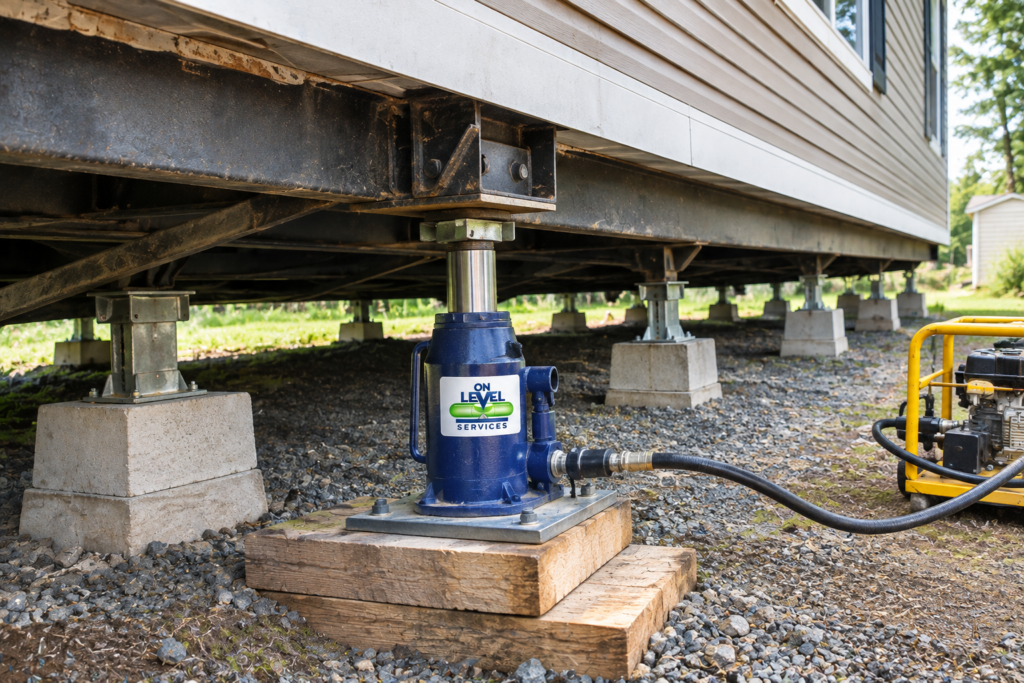
Yes. A quick look under the home once or twice a year can catch problems early. Look for standing water, sunken or tilted piers, loose shims, damaged straps, and plumbing leaks. Our mobile home maintenance page has more tips.
Does skirting need to be removed to level a mobile home?
The crew needs to reach the crawl space, piers, and frame, which usually means opening or removing a section of skirting. We’ll talk through access with you when you schedule.
Will re-leveling affect my skirting?
It can. When a home is out of level, the skirting is often fitted to the uneven position. Once the home is back to level, the skirting may need to be adjusted to the new height. That adjustment isn’t included in the re-level price.
Do you install or repair skirting?
No. We focus on leveling, tie-downs, and foundations. If your skirting needs repair or adjustment after a re-level, a skirting contractor can handle it.
Financing and FHA/VA Foundations
What is an FHA/VA qualifying foundation?
It’s a permanent foundation system that meets HUD’s Permanent Foundations Guide for Manufactured Housing, which FHA and VA lenders use. The systems we install also meet state tie-down requirements and are seismically rated. Visit our FHA/VA foundation systems page to learn more.
Do I need an engineer's certification for my loan?
Usually, yes. A licensed engineer inspects the installed foundation and provides the certification your lender asks for. We install the foundation system and work closely with area engineers so the certification step goes smoothly. Ask your lender exactly which documents they need.
Should my home be re-leveled before foundation work?
Yes, if it has settled. Installing a foundation system, tie-downs, or an earthquake system on an out-of-level home locks the problem in and can make it impossible to fully level the home later. We check level first and re-level when needed.
How long does an FHA/VA foundation installation take?
Timing depends on the home and the site. Loan closings often run on tight deadlines, so contact us as early as possible in the buying or refinancing process.
Why would I need an FHA/VA foundation?
You may need one if you are:
- Buying a manufactured home with an FHA or VA loan
- Selling a home to a buyer who is using FHA or VA financing
- Refinancing into an FHA or VA loan
- Applying for a reverse mortgage


How much does an FHA/VA foundation cost?
Cost depends on the home and the system it needs. As an example, a typical installed earthquake-resistant bracing system that qualifies for FHA/VA lending runs about $5,800. Call 360-333-2829 for pricing on your home.
Still Have Questions? Contact Us
Every home is different, and the best way to know your exact mobile home leveling cost is to talk with us. Our certified installers check your level, piers, and tie-downs and give you a clear price with no surprises.
- Licensed, bonded, and insured
- More than 30 years of manufactured home experience
- HUD-compliant tie-downs and FHA/VA qualifying foundations
- Serving Whatcom, Skagit, Snohomish, Island, King, Pierce, Thurston, Mason, Kitsap, Jefferson, Clallam, Chelan, Kittitas, and Yakima counties
Call 360-333-2829 or visit our North Western WA service area page to schedule. Outside our area? Find an On Level provider near you.