

When Should I Re-Level My Home? How Often to Level a Mobile Home
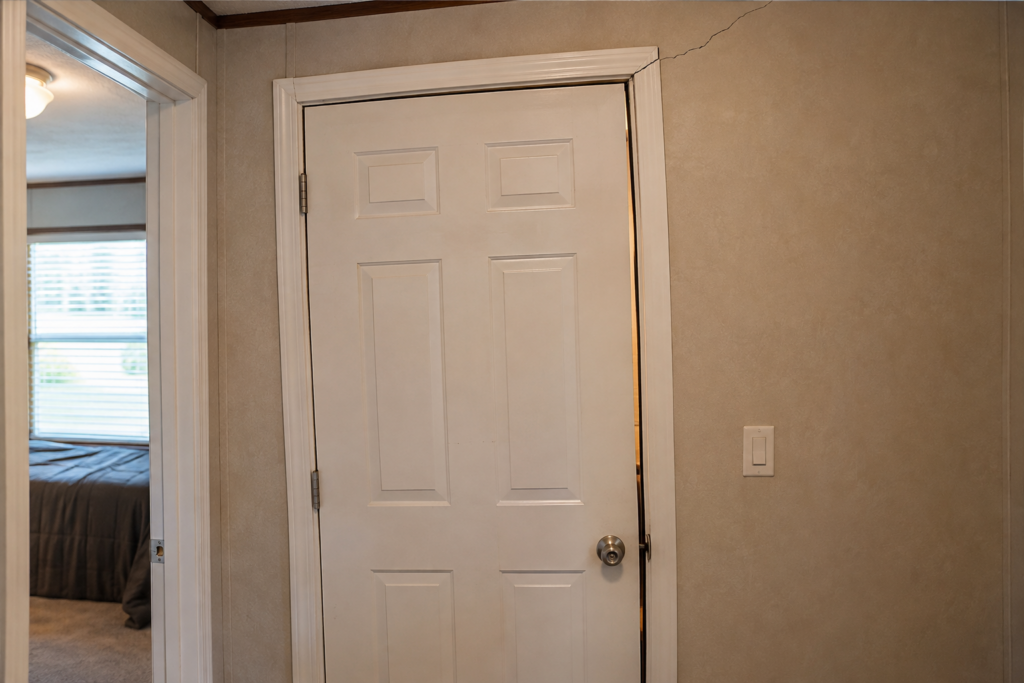
Most manufactured homes should have their level checked every 3 to 5 years and be re-leveled when pier heights differ by more than ¼ inch. That’s not because something has gone wrong. It’s because the ground beneath them never stops moving. If you’re already noticing doors that stick or swing on their own, new cracks near window frames, or a home that feels like it tilts toward one corner, the time is now.
Think of your support piers like table legs: if one settles shorter, everything on top tilts. The steel I-beams running the length of your home act as its skeleton. When the soil beneath the piers shifts, that skeleton tilts, and everything attached to it follows, including walls, door frames, plumbing connections, and roof seams. The symptoms you notice inside the house are almost always downstream effects of what’s happening under the home, and they tend to get worse until you address the cause.
How Often Should You Level a Mobile Home?
A practical maintenance baseline is a level check every 3 to 5 years. Some homes on stable, well-compacted, well-drained ground go longer without needing adjustment, while homes on soft or wet ground may need attention every couple of years. There’s no single schedule that fits every home, because the ground under your site is the real variable.
The most important window is the first 12 months after installation. New manufactured homes almost always settle to some degree as the soil under the piers compresses under the home’s weight. An early check catches that settling before it leads to door frame damage or strained plumbing connections, and it gives you a baseline for future checks.
Local soil conditions, the site’s moisture history, and the quality of the original setup are the three biggest factors in how often a home needs re-leveling. A home set on a well-prepared gravel pad with good drainage behaves very differently from one placed on native soil that was never graded. More than 22 million Americans live in manufactured homes, according to the U.S. Department of Energy’s manufactured housing guide, and those homes hold up best when leveling is treated as recurring maintenance rather than a one-time setup task. Not sure whether your home is due? Learn about professional mobile home re-leveling.
Causes of Settling & Shifting
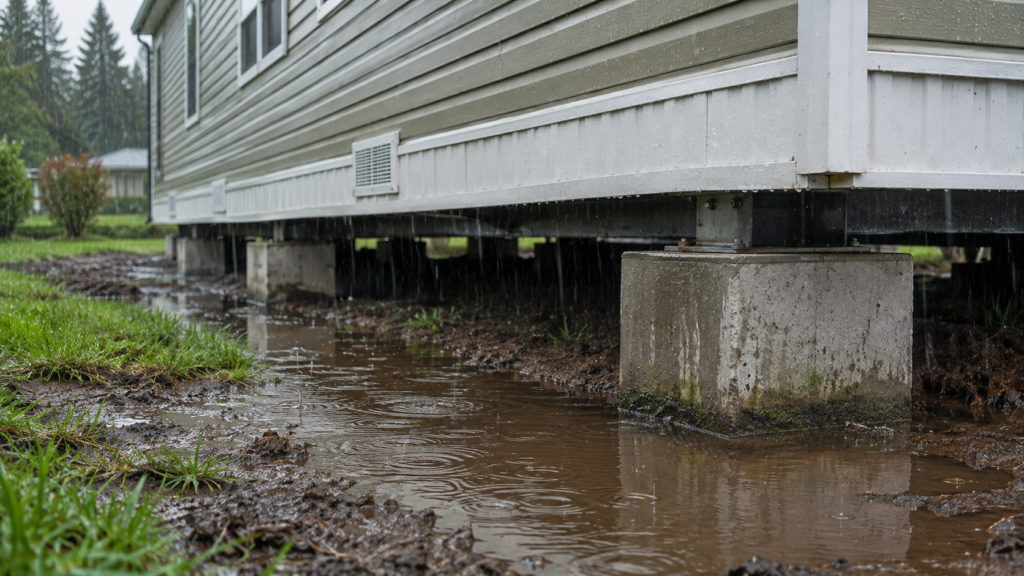
The ground under a manufactured home isn’t static. Soil expands when it absorbs water and contracts as it dries, and that movement shifts piers unevenly. Some piers sink a fraction of an inch while others hold firm, and that difference is what pulls your home’s frame out of alignment. All manufactured homes are built to the federal Manufactured Home Construction and Safety Standards (24 CFR 3280), but even a home built perfectly to that code will go out of level if the ground beneath its piers moves.
The most common causes of settling include:
- Soil moisture changes: Heavy rain, dry spells, or poor drainage make soil expand and contract repeatedly, shifting piers unevenly over time.
- Improper drainage: Clogged gutters or poor grading let water pool around the home and soften the soil directly beneath the footings.
- Frost heave: Freezing ground can push pier settings up and tilt them, a bigger factor in colder climates and higher-elevation areas.
- Deteriorating shims and piers: Wood shims compress, rot, or are damaged by wood-boring insects, and steel piers can rust or sink into soft ground.
- Burrowing animals and tree roots: Both disturb the soil directly under pier settings.
- Plumbing leaks: Slow leaks from water or sewer lines saturate the soil right where the home’s weight is concentrated.
- Improper original setup: Piers that were overloaded from day one wear out before their time.
If any of these sound familiar, such as pooling water near the skirting, aging wood shims, or a plumbing leak you patched but never fully resolved, it’s worth having the piers checked. Find your local On Level provider for a free quote.
Seasonal Factors That Affect Your Home's Level
Every region has its own seasonal cycle, and the ground under your home responds to it. In wet seasons, many soils absorb water slowly and hold it for weeks, so the ground under a home’s piers can stay saturated long after a storm passes. Over a long wet stretch, soft spots let individual piers sink or tilt a little at a time. A home that was level at the start of the season can show a noticeable slope by the end of it, not because of one storm but because of months of gradual movement.
Dry seasons bring the opposite problem. As clay-heavy soils dry out, they shrink and can open small gaps beneath footings that used to be in full contact with the ground. In colder climates, freeze-thaw cycles add another layer of movement as frozen ground pushes piers up and then releases them. The cycle of swelling, shrinking, and shifting repeats every year, and each repetition adds to the total movement. That’s why it’s worth checking your level after an especially wet season or a hard winter, not just on a fixed calendar.
When to Re-Level Sooner Than Scheduled
The 3-to-5-year guideline is a baseline, not a deadline. Schedule a re-level sooner if:
- Warning signs appear: Sticking doors, new drywall cracks, or a home that feels tilted mean the piers have already moved.
- Your home sat in or near floodwater: Saturated ground can soften under pier pads for weeks after the water goes down.
- You felt an earthquake: Even a moderate quake can shift piers and shims.
- You’re planning other work: Re-level before remodeling, building a deck, or installing tie-downs or an FHA/VA foundation, because that work locks the home in its current position.
- You’re getting ready to sell: Buyers and inspectors notice sticking doors and sloped floors.
- It’s been a year since the home was set: New homes almost always settle in the first year.
For a full list of symptoms and what they mean, see our guide to the signs your mobile home needs leveling.
Schedule Your Re-Leveling
A professional re-level follows a consistent sequence regardless of the home’s size. Knowing what’s involved helps you judge whether a contractor is doing the job thoroughly. Here’s how we do it:
- We open up access to the crawl space and set a water level to the bottom of the I-beam at the nearest pier.
- We measure every other pier setting against that height to see which piers have dropped or risen.
- We work out the average height across all of the pier settings.
- We raise or lower the I-beam at each pier to match that level.
- We confirm the home is level and every pier is carrying its share of the weight before we leave.
Re-leveling pricing is based on your home’s size (single-wide, double-wide, or triple-wide), with add-ons for homes more than 1 inch out of level, replacement materials, and travel. Your local On Level provider will give you a clear quote before any work begins. Compare that with what an out-of-level home costs over time: twisted frame members, strained plumbing connections, and leaking roof seams are all far more expensive to repair than the re-level that would have prevented them.
There’s a financing side, too. According to the U.S. Department of Energy’s affordable manufactured housing study, a manufactured home must be permanently installed on an approved foundation to qualify for FHA-insured or conventional mortgages. Homes on rented land are typically financed with chattel loans, which carry higher interest rates and shorter terms. If you’re planning to buy, sell, or refinance, learn about our FHA/VA foundation systems.
Request a Free Quote Today
Protecting your home starts with catching settling before it causes lasting damage. The homes that hold up best over decades are the ones where owners treat leveling as routine maintenance instead of a crisis. If your home is showing any of the symptoms described here, or it’s simply been more than five years since its last level check, find your local On Level provider for a free quote. On Level Services brings more than 30 years of manufactured home experience to homeowners across Washington, Oregon, Idaho, Colorado, and Florida.